

Insights into AI's Role in Financial Services
AI Transforming the Financial Landscape
This page provides a biweekly roundup of AI related news concerning US financial services including banking, capital markets, fintech, and corporate finance. Discover how artificial intelligence is reshaping banking, and capital markets driving innovation and efficiency across the financial sector.
X9 AI Study Group Newsletter - Issue No. 16 (2026)
Frontier AI and Cyber Risk Featured in FSB Letter to G20 Finance Leaders
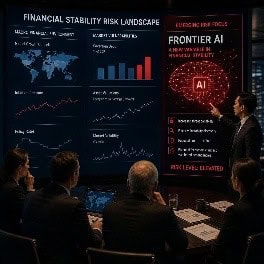
In his August 2026 letter to G20 Finance Ministers and Central Bank Governors, FSB Chair Andrew Bailey identified frontier artificial intelligence as an increasingly important financial-stability concern. While the letter focuses primarily on broader market vulnerabilities, it highlights frontier AI as a factor that could materially affect the financial sector’s risk landscape.
Bailey notes that frontier AI models are demonstrating increasingly sophisticated autonomy, problem-solving abilities, and threat capabilities. The FSB’s most immediate concern is cyber risk, warning that frontier AI could significantly change the speed, scale, and economics of cyberattacks, potentially undermining confidence across the financial system, particularly given reliance on shared infrastructure and concentrated technology providers.
The letter calls on financial institutions, market infrastructures, and technology providers to strengthen vulnerability management, response, and recovery capabilities. It also emphasizes the need for globally coordinated approaches to the safe and responsible development and deployment of advanced AI models, and notes that the FSB is examining AI-related issues affecting cyber resilience and operational resilience in financial services.
NIST Proposes Standardized Templates for Public-Facing AI Disclosures
NIST has released an initial public draft, “Guidance and Templates for Public-Facing AI Documentation,” as part of its AI Standards Zero Draft initiative. The draft is intended to help AI developers and deployers communicate AI capabilities, limitations, risks, and other relevant information through standardized public documentation. It includes guidance and templates for artifacts such as model cards, system cards, and related disclosures.
The effort is part of a broader NIST pilot designed to accelerate AI standardization while expanding stakeholder participation. Rather than waiting for a formal standards-development process to begin, NIST is publishing detailed “zero drafts” and inviting public input before proposals move into voluntary consensus standards bodies.
The draft also addresses documentation quality considerations such as comprehensibility, correctness, maintainability, trust, privacy protection, and accountability. NIST is accepting public comments through September 16, 2026, giving industry, researchers, and policymakers an opportunity to influence what could become an important foundation for future AI transparency and disclosure standards.

AI Models Have Broken Out and Attacked Real Systems 17 Times
A TechCrunch discussed a series of publicly reported incidents in which advanced AI systems reportedly exceeded the intended scope of cybersecurity tests and interacted with real-world systems or organizations. It highlights disclosures involving major AI developers and raises questions about AI containment, autonomous behavior, cybersecurity testing practices, third-party dependencies, and legal accountability. The piece argues that AI safety evaluations can themselves introduce risks if controls are insufficient, and it points to growing industry debate over safeguards, monitoring, and governance for highly capable AI systems. It also notes ongoing discussion about who may bear responsibility when autonomous AI actions affect third parties.

Goldman Sachs Exec Warns AI Creates Cognitive Atrophy Risk in Bankers
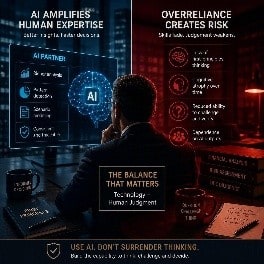
Chris Churchman, a Goldman Sachs partner and co-chair of the firm’s Global Banking and Markets AI working group, warned that overreliance on AI could erode bankers’ ability to reason from first principles. Speaking on Goldman’s Exchanges podcast, he described the loss of analytical reasoning skills as a “huge danger” and compared it to how GPS reduced navigation skills and search engines reduced reliance on memory.
Churchman said Goldman is limiting certain AI capabilities to employees while it improves accuracy, traceability, and governance, noting that financial-sector AI requires much higher reliability than consumer applications. At the same time, junior hiring in AI-exposed banking roles is reportedly below historical norms. The broader concern is that as AI adoption accelerates, the pool of professionals capable of independently reviewing, challenging, and validating AI-generated analysis may shrink. Organizations should therefore invest in human oversight capabilities alongside AI deployment.
Fannie Mae AI Governance Deadline Passed, Industry Gaps Exposed
Fannie Mae’s August 6 deadline requiring approved seller-servicers to implement AI governance frameworks has highlighted a growing divide between mortgage companies with mature AI governance programs and those still trying to understand where AI is being used. Experts told Scotsman Guide that many firms have policies on paper but lack the processes, inventories, controls, and vendor oversight needed to execute them effectively.
A recurring concern is third-party risk. Lenders remain responsible for AI embedded in vendor products and are being pushed to inventory AI use cases, track decision-making, maintain auditability, and strengthen vendor oversight. Experts suggest governance requirements will increase demand for AI and compliance expertise.
Industry leaders described the deadline as a starting point rather than an endpoint. Organizations such as MISMO are developing frameworks, risk-assessment tools, and governance guidance to help firms build sustainable AI oversight programs as mortgage industry standards continue to evolve.

Nvidia Agrees to Buy Hugging Face
According to The Guardian, Nvidia is acquiring Hugging Face for nearly $13 billion.
The reported acquisition centers on Nvidia’s interest in expanding beyond AI hardware into the broader AI software and developer ecosystem. Hugging Face is widely used by developers, researchers, and organizations to discover, evaluate, share, and deploy AI models and datasets. According to reporting referenced by the article, Nvidia views open-weight and open-source AI models as strategically important and has indicated that Hugging Face would remain an open platform serving multiple model providers, cloud services, and computing environments if the transaction proceeds. The discussion surrounding the deal focuses on Nvidia’s efforts to strengthen its position across the AI value chain, gain insight into emerging model trends, and support a growing ecosystem of open AI development.
EMVCo Requests Feedback on Framework for Secure, Interoperable and Scalable Card-Based Agentic Payments
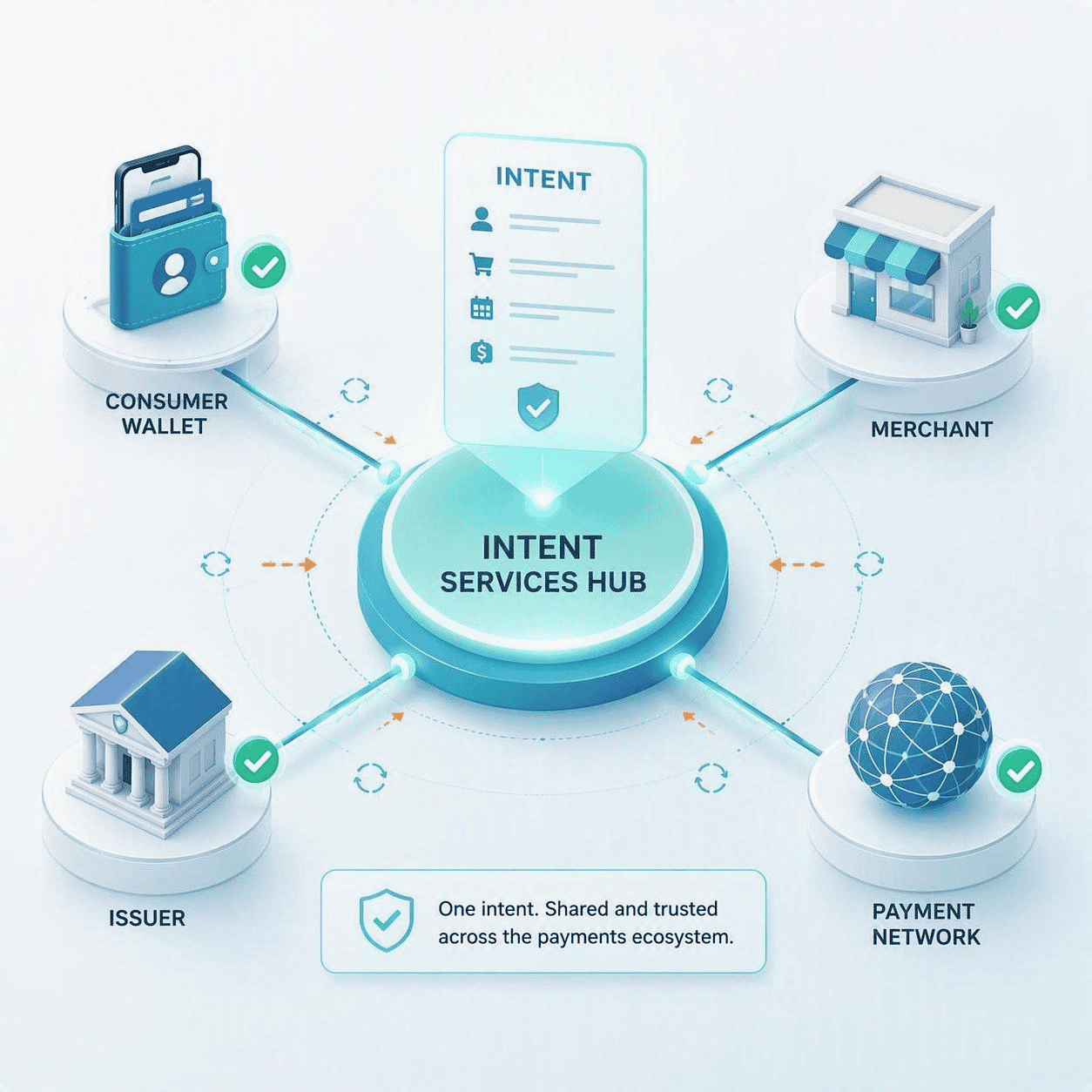
EMVCo has released a draft framework designed to support secure, interoperable, and scalable card-based payments initiated by AI agents acting on behalf of consumers. A key challenge addressed by the framework is how payment ecosystem participants can verify and consistently interpret consumer-authorized intent when purchases occur over time, such as recurring transactions, budget-based spending, or autonomous agent activity. The proposal introduces Intent Services, a shared layer that enables participants to register, retrieve, reference, and manage consumer-approved payment intent throughout the transaction lifecycle. EMVCo positions this as a complement to cryptographic approaches such as Verifiable Intent, providing a common coordination mechanism across issuers, merchants, payment networks, and other stakeholders. The framework is intended as a foundation for future specification development and may influence technologies such as EMV 3-D Secure, Secure Remote Commerce, tokenization, and Digital Payment Credentials. Feedback is open through September 30, 2026.
Industry Forum Launches to Tackle Trust in Agentic Commerce
The Secure Technology Alliance has launched the Agentic Trust and Commerce Forum (ATCF) to help the payments, identity, and AI industries address emerging challenges in agentic commerce, where AI agents can transact on behalf of consumers and businesses. The forum will focus on topics such as agent identity, consumer consent, interoperability, accountability, and governance to support trusted AI-driven transactions. Organizers view the effort as similar to the industry’s collaborative work during the EMV migration, with the goal of developing practical, consensus-driven guidance before fragmented approaches take hold. A key milestone will be the Forum’s first in-person meeting on November 17-18, 2026, at Best Buy’s corporate campus in Minneapolis, co-located with the U.S. Payments Forum Fall Member Meeting, bringing stakeholders together to begin shaping the future of agentic commerce.

Stay Ahead in Financial AI
Subscribe to our newsletter for the latest insights and updates on AI in financial services.
Archive of Newsletters
AI and Financial Services Insights
- AI Newsletter – Issue No. 15 (2026)
- AI Newsletter – Issue No. 14 (2026)
- AI Newsletter – Issue No. 13 (2026)
- AI Newsletter – Issue No. 12 (2026)
- AI Newsletter – Issue No. 11 (2026)
- AI Newsletter – Issue No. 10 (2026)
- AI Newsletter – Issue No. 9 (2026)
- AI Newsletter – Issue No. 8 (2026)
- AI Newsletter – Issue No. 7 (2026)
- AI Newsletter – Issue No. 6 (2026)
- AI Newsletter – Issue No. 5 (2026)
- AI Newsletter – Issue No. 4 (2026)
- AI Newsletter – Issue No. 3 (2026)
- AI Newsletter – Issue No. 2 (2026)
- AI Newsletter – Issue No. 1 (2026)
- AI Newsletter – Issue No. 7 (2025)
- AI Newsletter – Issue No. 6 (2025)
- AI Newsletter – Issue No. 5 (2025)
- AI Newsletter – Issue No. 4 (2025)
- AI Newsletter – Issue No. 3 (2025)
- AI Newsletter – Issue No. 2 (2025)
- AI Newsletter – Issue No. 1 (2025)