

Insights into AI's Role in Financial Services
AI Transforming the Financial Landscape
This page provides a biweekly roundup of AI related news concerning US financial services including banking, capital markets, fintech, and corporate finance. Discover how artificial intelligence is reshaping banking, and capital markets driving innovation and efficiency across the financial sector.
X9 AI Study Group Newsletter - Issue No. 6 (2026)
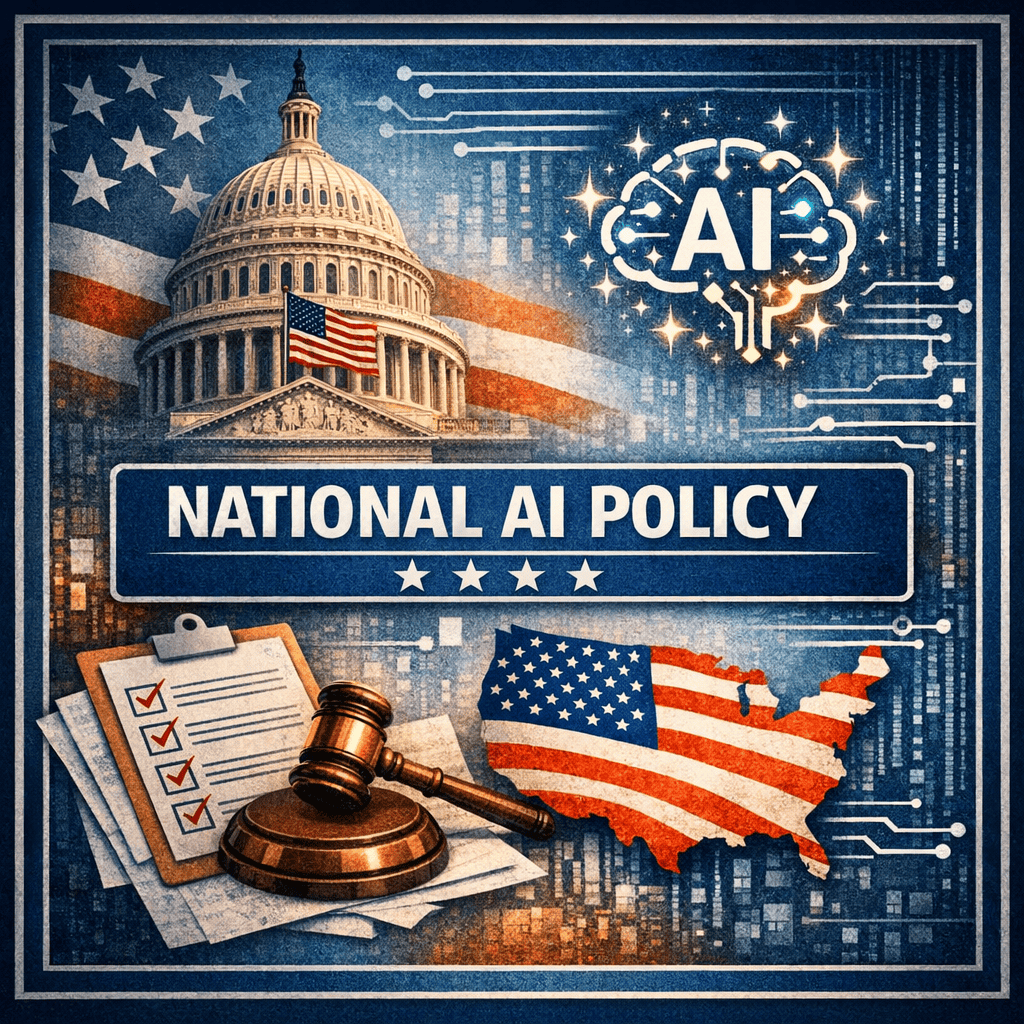
White House Proposes Federal AI Framework to Override State Laws
The National Policy Framework for Artificial Intelligence outlines a plan for a single federal AI law that would replace conflicting state rules. Federal regulators such as the Federal Reserve, the Securities and Exchange Commission, and the Consumer Financial Protection Bureau would oversee AI use in financial services, with a focus on innovation and existing regulatory structures rather than on new agencies.
For now, state AI laws remain in effect, so your compliance work stays complex. You should track both state and federal developments, strengthen vendor and model risk controls, and ensure strong data governance and audit trails as AI use expands across financial operations.
Treasury and FSOC Launch AI Innovation Series for Financial Sector
The U.S. Department of the Treasury and the Financial Stability Oversight Council launched an AI Innovation Series to bring together banks, tech firms, and regulators. The goal is to identify strong AI use cases and scale adoption across financial services while maintaining safety and soundness. Leadership signaled a clear shift. Not adopting AI now counts as a business and operational risk.
Treasury also released a financial-sector AI lexicon and a risk-management framework based on the National Institute of Standards and Technology AI framework. The guidance includes 230 control objectives across the full AI lifecycle. Use this as a baseline for governance, vendor risk, testing, and audit. The framework is voluntary, giving you time to align your controls before formal regulation takes effect.
Anthropic Claude Code Leaks their Source Code
Anthropic unintentionally exposed internal source code for Claude Code after a misconfigured npm release published a large sourcemap pointing to an internal archive. The material included roughly 500,000 lines of mostly TypeScript covering the client side and agent orchestration layer, such as the query engine, multi agent coordination, tooling, and some unreleased features. It did not include model weights or training data.
According to public reports and Anthropic’s statements, no customer data or sensitive infrastructure secrets were exposed, and the issue resulted from packaging errors rather than an external breach. The disclosure offers insight into how a commercial AI coding assistant orchestrates models and tools, but primarily creates reputational and ecosystem security risks rather than enabling replication of Claude itself.

NIST Identifies Critical Gaps in Post-Deployment AI Monitoring
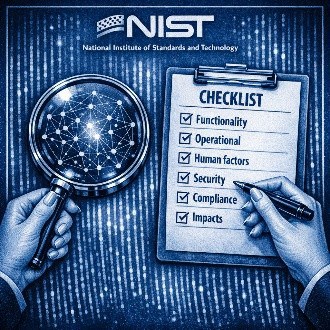
The National Institute of Standards and Technology released AI 800-4 through its Center for AI Standards and Innovation, highlighting gaps in organizations’ monitoring of AI after deployment. The report shows weak standards, inconsistent terminology, and limited real-world testing. Monitoring must confirm system reliability, track model drift, and detect unintended outcomes once AI operates in production.
For financial teams, this gap creates risk in areas such as credit, fraud, and customer service. Regulators are expanding model risk expectations to include generative AI and large language models. Use this report as a reference to strengthen post-deployment monitoring, improve auditability, and close gaps in your current model risk controls.
Treasury's AI Risk Framework Gives Financial Institutions 230 Control Objectives
The U.S. Department of the Treasury released the Financial Services AI Risk Management Framework, built with input from over 100 financial institutions and aligned to the National Institute of Standards and Technology AI framework. It defines 230 control objectives across the AI lifecycle and organizes them into four areas: Govern, Map, Measure, and Manage. The guidance is voluntary, with expectations scaled to the extent AI is used in your operations.
Treat this framework as a preview of future regulatory expectations. Voluntary standards in financial services often become mandatory within two years. Start a gap assessment now against the 230 controls, document your findings, and align your governance, risk, and audit processes. Early preparation will reduce compliance risk and position your team ahead of formal examiner requirements.

Stay Ahead in Financial AI
Subscribe to our newsletter for the latest insights and updates on AI in financial services.
Archive of Newsletters
AI and Financial Services Insights
- AI Newsletter – Issue No. 4 (2026)
- AI Newsletter – Issue No. 3 (2026)
- AI Newsletter – Issue No. 2 (2026)
- AI Newsletter – Issue No. 1 (2026)
- AI Newsletter – Issue No. 7 (2025)
- AI Newsletter – Issue No. 6 (2025)
- AI Newsletter – Issue No. 5 (2025)
- AI Newsletter – Issue No. 4 (2025)
- AI Newsletter – Issue No. 3 (2025)
- AI Newsletter – Issue No. 2 (2025)
- AI Newsletter – Issue No. 1 (2025)